
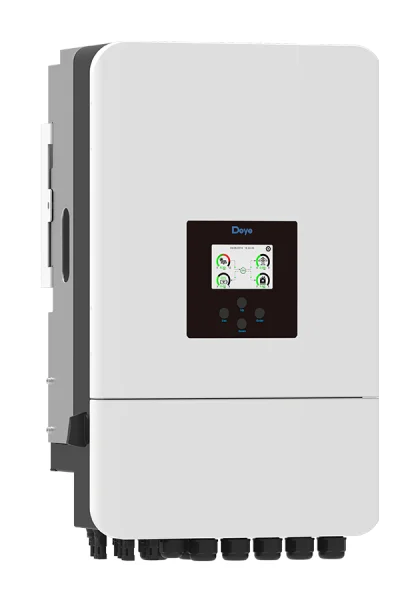
Single-phase · low voltage
Single-phase 3.6–10 kW
Deye SUN-3.6…10K-SG05LP1-EU
- Battery
- 48 V (40–60 V)
- MPPT
- 2
- Max PV voltage
- 500 V
- Dimensions
- 366 × 589.5 × 237 mm
Suits: Summer cottage, smaller home, off-grid system with a generator.
A hybrid inverter is the brain of a solar plant: it decides at every moment whether the panels' production goes to the house, the battery or the grid. We install Deye single-phase (3.6–18 kW) and three-phase (5–25 kW) hybrid inverters for both low-voltage 48 V and high-voltage 160–700 V batteries.
Updated · Technical data: official Deye datasheets
Single-phase
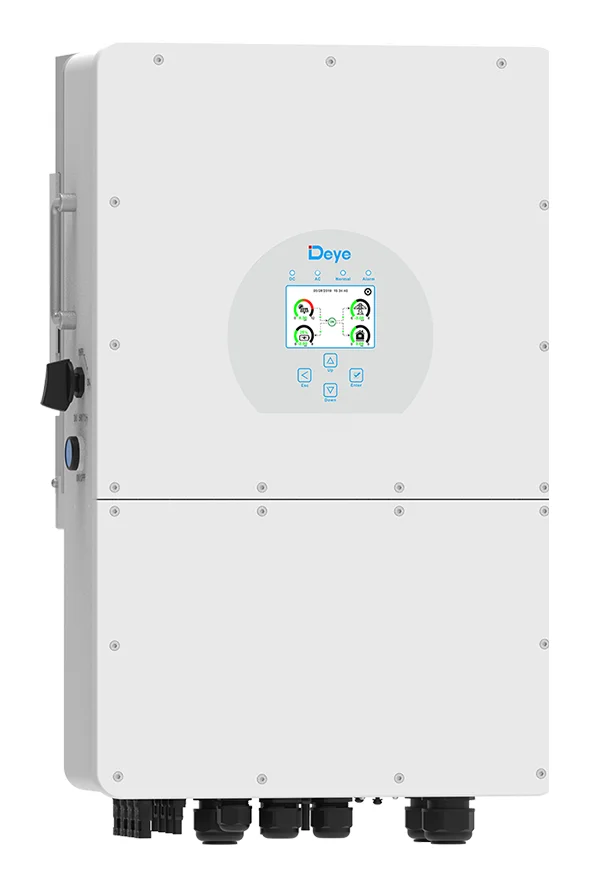
Three-phase
For a grid-connected home and business we install a three-phase inverter. We use a single-phase one in an off-grid system and at sites where there are no three phases or they are not needed.
Connection
Deye power ratings
Battery
Off-grid peak power
Asymmetric output
Best suited for
An off-grid system does not need three phases, and generators are generally single-phase. A single-phase inverter works directly with a generator and the system stays simpler.
2 ×
peak power for 10 seconds to start motors and pumps
48 V
low-voltage battery — the system already works with a single ~5 kWh battery
18 kW
the largest single-phase Deye inverter we install
Typical off-grid sites are a summer cottage, a farm outbuilding, a hunting lodge or a building site. When there is little sun, a generator charges the battery through the inverter's generator input.
Choose low voltage (48 V) if you want a smaller battery or are upgrading an existing plant. Choose high voltage (160–700 V) if you are building a new system with a battery of at least 20 kWh or the cable runs are long.
Battery voltage
Smallest working battery
Current between battery and inverter
Cables
Battery output power
Battery availability
Best suited for
Both high- and low-voltage batteries are widely available today, and low-voltage batteries are also assembled in Estonia to bring down the price. Of the high-voltage battery systems we install Deye BOS-G and BOS-A — see the battery storage page for models, capacities and prices.
Two single-phase and two three-phase series cover everything from a summer cottage to a larger home and small business. For larger businesses we install Deye 30–50 kW high-voltage hybrid inverters.
Single-phase · low voltage
Deye SUN-3.6…10K-SG05LP1-EU
Suits: Summer cottage, smaller home, off-grid system with a generator.
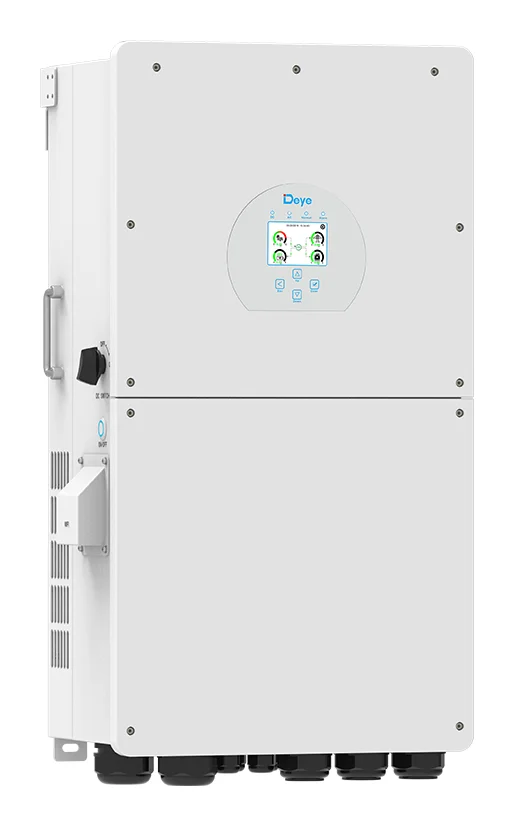
Single-phase · low voltage
Deye SUN-12…18K-SG01LP1-EU
Suits: Larger off-grid system, farm, building with a single-phase connection.
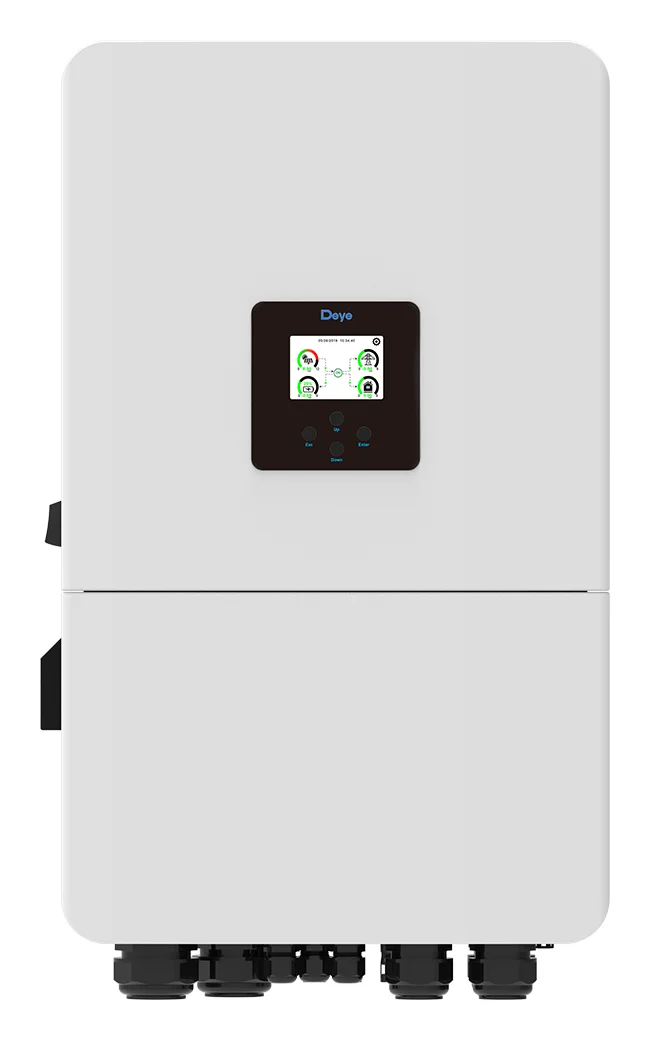
Three-phase · low voltage
Deye SUN-14…20K-SG05LP3-EU-SM2
Suits: Private house, upgrading an existing plant, smaller battery from ~5 kWh.
Three-phase · high voltage
Deye SUN-5…25K-SG01HP3-EU-AM2
Suits: New home or commercial building, battery from 4 modules (~20 kWh).
All four series have an efficiency of up to 97.6%, protection class IP65 and an operating temperature of −40…+60 °C (above 45 °C the inverter reduces its output). The warranty is 5 years, up to 10 years depending on the country of installation.
| Item | Single-phase 3.6–10 kW | Single-phase 12–18 kW | Three-phase low-voltage 14–20 kW | Three-phase high-voltage 5–25 kW |
|---|---|---|---|---|
| Phases | 1 (L + N) | 1 (L + N) | 3 (3L + N) | 3 (3L + N) |
| Rated power | 3.6–10 kW | 12–18 kW | 14–20 kW | 5–25 kW |
| Battery voltage | 48 V (40–60 V) | 48 V (40–60 V) | 48 V (40–60 V), 2 battery inputs | 160–700 V |
| Max charge and discharge current | 90–210 A | 220–380 A | 260–350 A | 30–50 A |
| MPPT trackers | 2 | 3 | 2 | 2 |
| Max PV input voltage | 500 V | 500 V | 800 V | 1000 V |
| Max PV input power | 5.76–16 kW | 19.2–28.8 kW | 22.4–32 kW | 8–40 kW |
| Off-grid peak power | 2 × rated power, 10 s | 2 × rated power, 10 s | 2 × rated power, 10 s | 1.5 × rated power, 10 s |
| Max AC pass-through current (grid → load) | 35–50 A | 100–200 A | 70 A | 40–80 A |
| Efficiency | 97.6 % (Euro 96.5 %) | 97.6 % (Euro 96.5 %) | 97.6 % (Euro 97.0 %) | 97.6 % (Euro 97.0 %) |
| Noise | < 45 dB | < 55 dB | < 60 dB | ≤ 55 dB |
| Dimensions (W × H × D) | 366 × 589.5 × 237 mm | 464 × 763–863 × 282 mm | 456 × 750 × 268.5 mm | 408 × 638 × 237 mm |
| Weight | 26.8 kg | 54.1–59.8 kg | 51.9 kg | 30.5 kg |
| Asymmetric output | — | — | 50% (≤ 15 kW), 100% (≥ 20 kW) | 50% (≤ 15 kW), 100% (≥ 20 kW) |
| Protection class | IP65 | IP65 | IP65 | IP65 |
| Warranty | 5 yrs, up to 10 yrs by country | 5 yrs, up to 10 yrs by country | 5 yrs, up to 10 yrs by country | 5 yrs, up to 10 yrs by country |
Dimensions exclude connectors and mounts. Peak power applies to off-grid operation for 10 seconds. We state the exact warranty period in Estonia in the quote.
An asymmetric three-phase inverter sends power to the phase where the consumption currently is, not equally to all three. That way less electricity has to be bought and the energy sold is accounted for.
In Estonia electricity is accounted for phase by phase. If a kettle draws 3 kW from one phase and a symmetric inverter gives 1 kW to each phase, the missing part is bought from the grid while the two other phases sell their surplus cheaply to the grid. This is called netting loss.
50 %
asymmetry on inverters up to 15 kW — half of the power can be directed to one phase
100 %
asymmetry on 20 kW and more powerful inverters
A hybrid inverter converts the panels' DC to AC, charges and discharges the battery, and keeps the house powered even during a grid outage.
A three-phase inverter sends power to the phase where consumption currently is. Models up to 15 kW have 50% asymmetry, from 20 kW 100%.
The system can be set up not to sell to the grid at all — needed when Elektrilevi limits feed-in.
Up to six time periods a day for charging and discharging the battery, so the battery can be charged at the cheap exchange price.
When the grid goes down, the inverter keeps selected circuits running from the battery and panels.
The battery can be charged from the generator input. The same input can also connect an existing solar plant inverter (AC coupling).
Over WiFi or 4G you can see production, consumption and battery level in the Deye Cloud app.
No. The inverter itself does not control additional devices. A separate automation controller does that through its relays, and the relay is programmed: what to switch on or off, when and on what basis.
A typical situation in an Estonian house: the panels produce their maximum at midday, but the family is at work. The boiler heats water in the morning, the electric car charges at night and the solar production is sold cheaply to the grid. An automation controller switches on the larger loads when there is the most of your own electricity.
| Device | What the automation does | Why it pays off |
|---|---|---|
| Boiler | A relay switches the boiler on during solar surplus or a cheap hour | A large and flexible load — the easiest win |
| EV charger | The charger schedules charging by solar production (built into VOOL and Deye chargers) | The largest single load in the house |
| Heating system | Raises the temperature in the daytime, using the house's thermal mass as storage | The house itself works as a battery |
| Ventilation, pumps | Run during cheap energy | A smaller win, but comes from the same controller |
As much as gives real benefit — and no more. Every extra control circuit is one more place where a fault can occur. That is why we build the system in layers: first the solar plant, inverter and, if needed, battery, which also work without automation; then the boiler and EV charger, which give most of the benefit; and heating only once the first layers have proven themselves.
Not always. The existing inverter can often be kept and the battery connected with AC coupling. If the inverter is old, it makes more sense to replace it with a hybrid inverter.
| Item | Replace with a hybrid inverter | Battery with AC coupling |
|---|---|---|
| When it suits | The existing inverter is old or due for replacement | The existing inverter is new and in working order |
| System integration | One device, one app | Two devices, two monitors |
| Backup power | Easier to solve | Depends on the battery inverter model |
| Cost | Clear after inspection | Clear after inspection |
Which route is cheaper becomes clear when we inspect the panel and the inverter. We tell you before you order anything.
For a grid-connected home or business we install a three-phase inverter. In an off-grid system we use a single-phase inverter, because three phases are not needed there and generators are generally single-phase.
Not automatically. A low-voltage system already works with a single battery of about 5 kWh, but a small battery has lower output power. A high-voltage system needs at least 4 battery modules, about 20 kWh, but gives lower current and a more compact installation. Both battery types are widely available today.
An asymmetric inverter sends power to the phase where the consumption is and so reduces netting loss. 100% asymmetry is on 20 kW and more powerful three-phase inverters; models up to 15 kW have 50%.
The inverter itself does not control additional devices. A separate automation controller does that through its relays, and the relay is programmed with rules for when and on what basis a device switches on or off.
The single-phase 3.6–10 kW and the three-phase 14–20 kW low-voltage and 5–25 kW high-voltage inverters have 2 MPPT trackers. The single-phase 12–18 kW inverter has 3, and the Deye SUN-50K inverter for businesses has 4 MPPT trackers.
The Deye manufacturer warranty is 5 years and, depending on the country of installation, up to 10 years. We state the exact warranty period in the quote.
All Deye hybrid inverters have protection class IP65 and withstand temperatures of −40…+60 °C. We still recommend a shaded or indoor installation, because above 45 °C the inverter reduces its output and direct sun speeds up ageing.
According to Deye, noise is under 45 dB for the single-phase 3.6–10 kW inverter and 55–60 dB for larger models. The noise comes mainly from cooling, so we install the inverter in a utility room, garage or side room, not behind a living-room wall.
A fault is visible remotely on the monitoring platform, so we usually know about a problem before the customer calls. The inverter is under warranty. For backup circuits we recommend a bypass switch, so that the house can get electricity straight from the grid during a fault.
Basic settings are available in the app. We leave deeper parameters locked, because changing those incorrectly is the most common cause of faults. If something needs reconfiguring, we do it together.
We inspect the panel and the existing plant, take your battery and charger plans into account and tell you which series makes more sense. We install across Estonia.