
Solar park for businesses — from rooftop to megawatt scale
A solar park is an investment for a business that lowers fixed costs and protects against swings in the electricity price. We install rooftop systems for self-consumption as well as large parks that sell to the grid — from zero-export solutions up to megawatt capacity. We give the payback calculation before you decide, not after.
- Payback calculation before you decide
- From zero export to a megawatt park
- Rooftop from €9,840 + VAT
- Design, permits and connection from one place
Updated
In brief
- A 15 kW rooftop system costs €9,840 + VAT, a 15 kW ground-mounted system €10,940 + VAT — a starting point for a smaller system; larger parks are project-based.
- Ground-mounted plants scale up to a megawatt, including for selling to the grid.
- Zero export solves the situation where selling to the grid is not allowed or sensible — all production is used on site.
- From the same system you can also order battery storage to cover consumption peaks (Deye BOS-A) and charging solutions for employees or customers.
- We give the payback calculation before you decide, not after — we take into account self-consumption, zero-export and grid-sale scenarios.
What can be installed for a business?
We install rooftop systems, ground-mounted plants, battery storage, charging solutions and hybrid inverters — all from one place, compatible with each other.
Rooftop solar
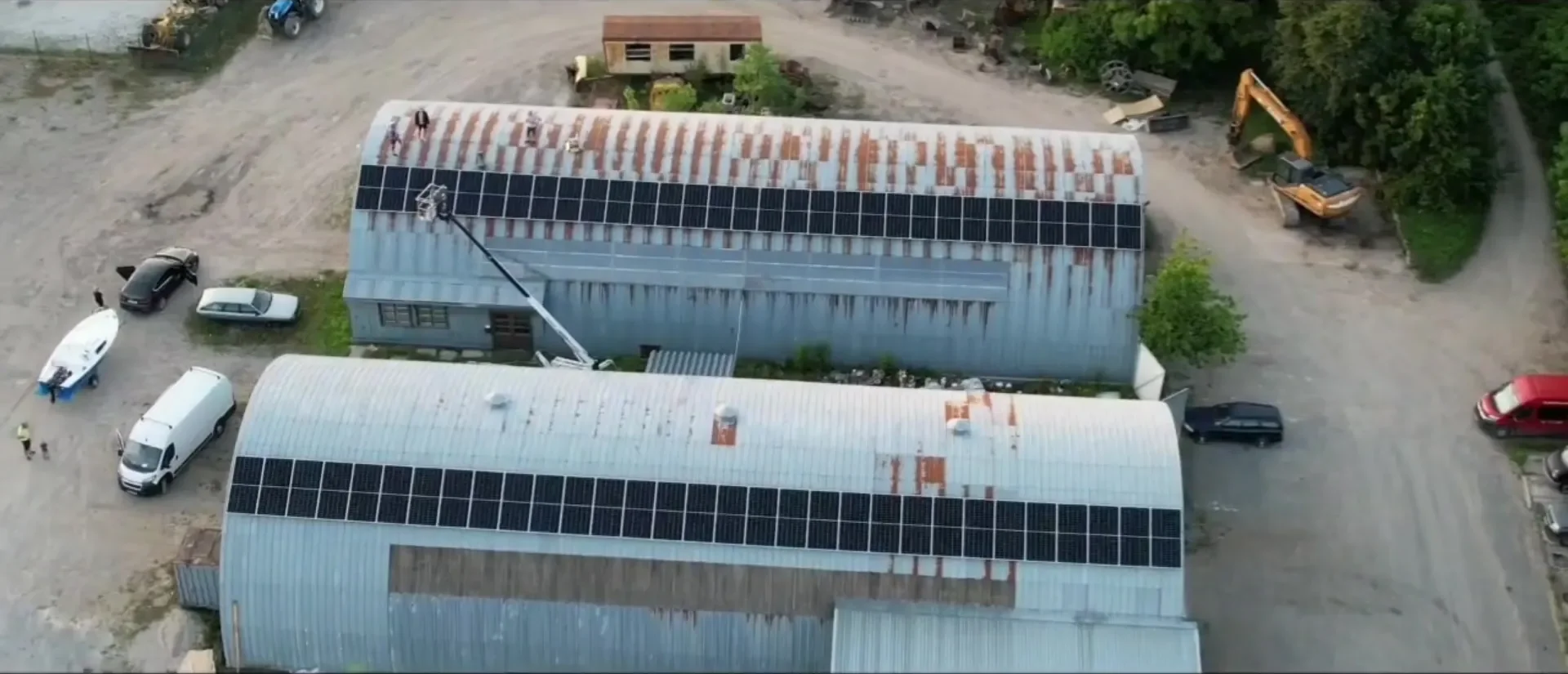
The roof of a production building, warehouse or commercial premises becomes an electricity-producing asset — roof warranty preserved.
from €9,840 + VATRead more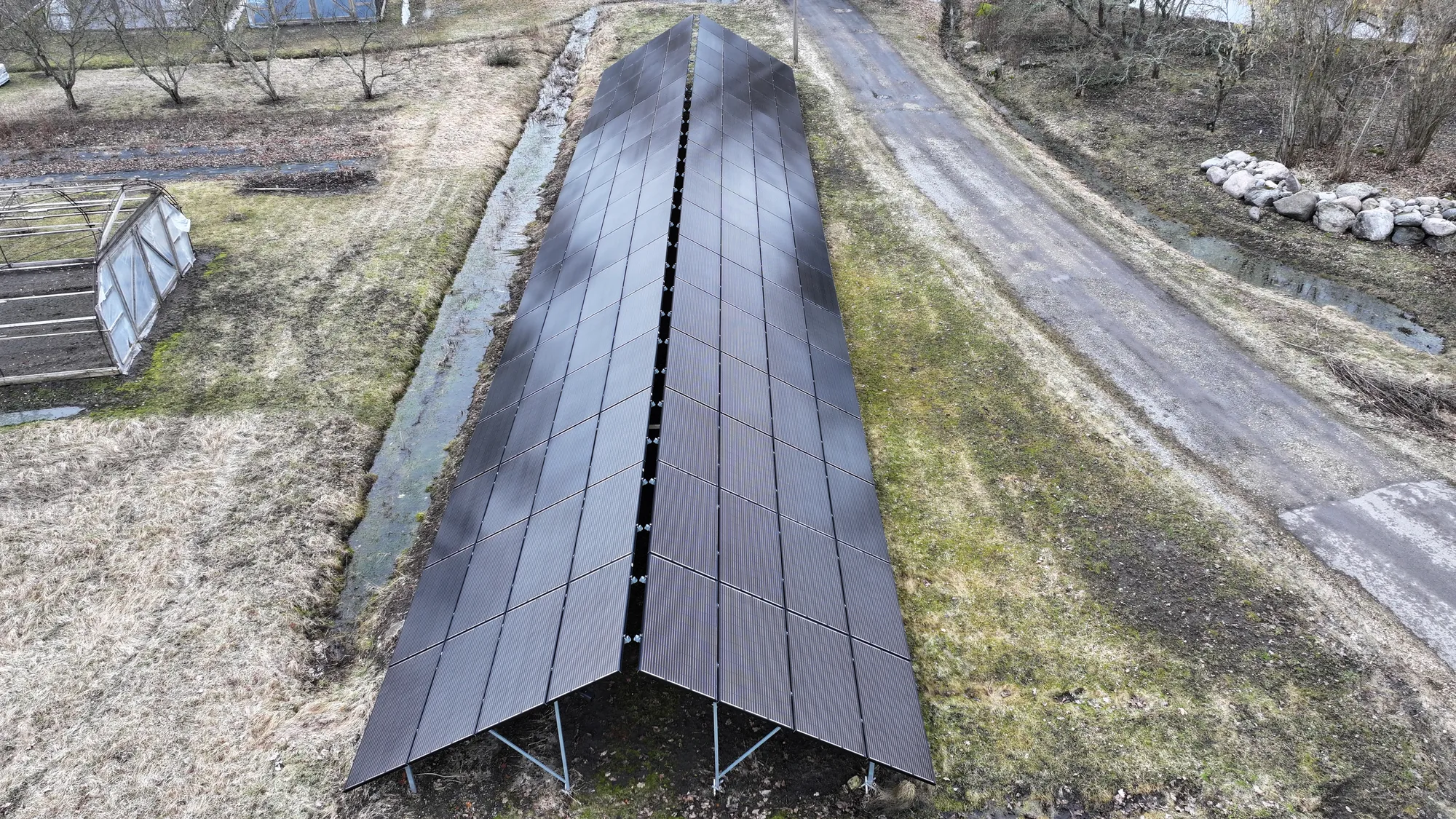
Ground-mounted solar
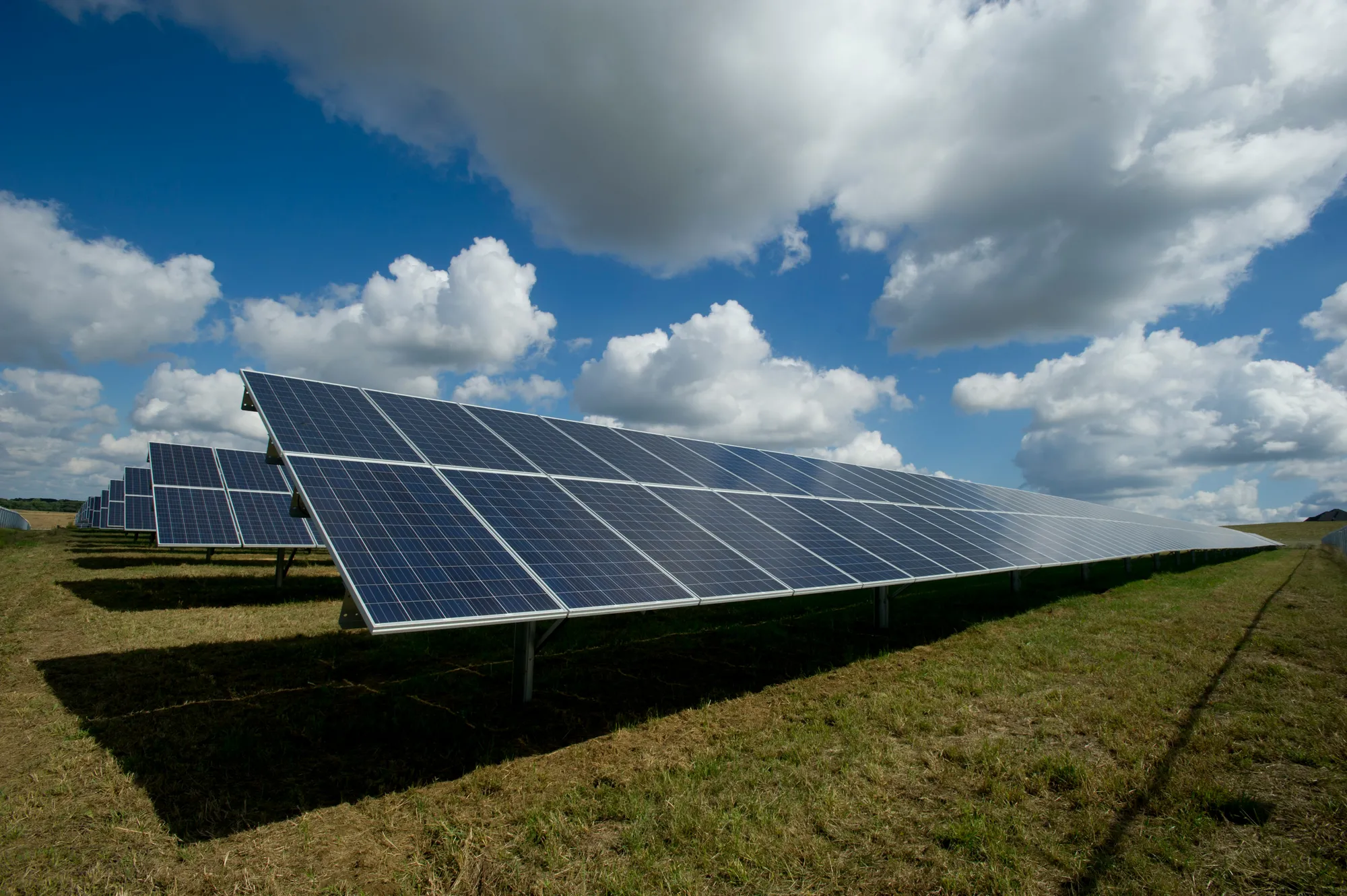
When you have more land than roof — scales up to a megawatt, including for selling to the grid.
from €10,940 + VATRead more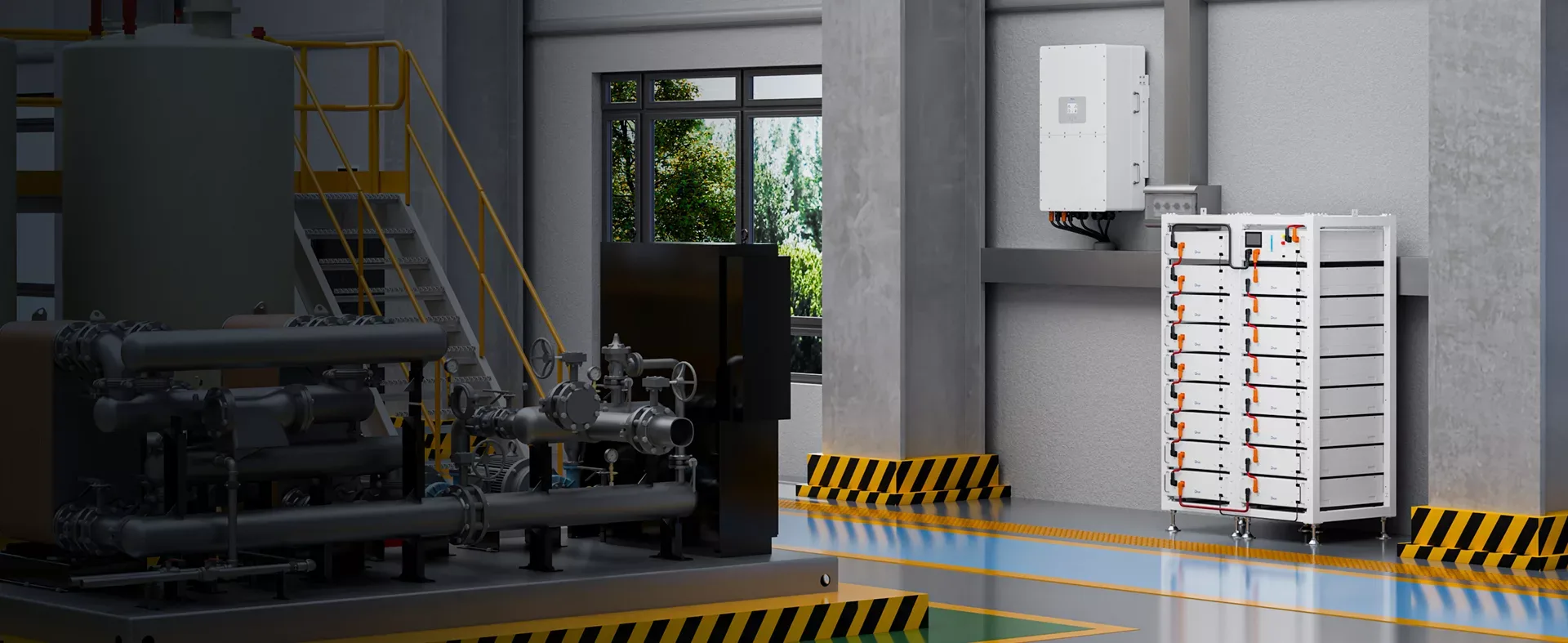
Battery storage
Deye BOS-A for a production building — cuts consumption peaks and raises self-consumption without increasing the connection.
on requestRead more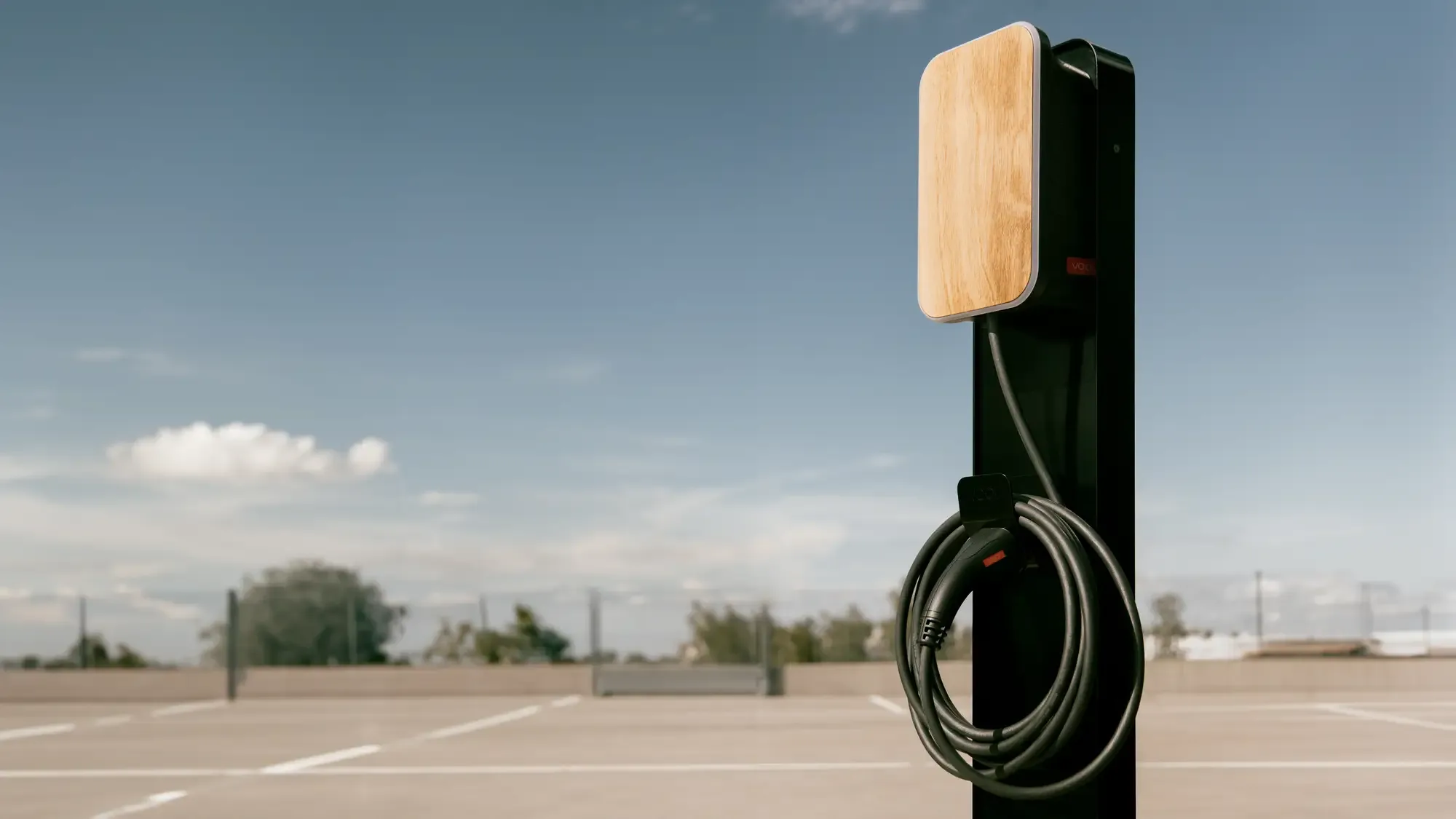
EV chargers
VOOL chargers for employee and customer car parks, with load sharing and OCPP support.
from €1,500 + VATRead more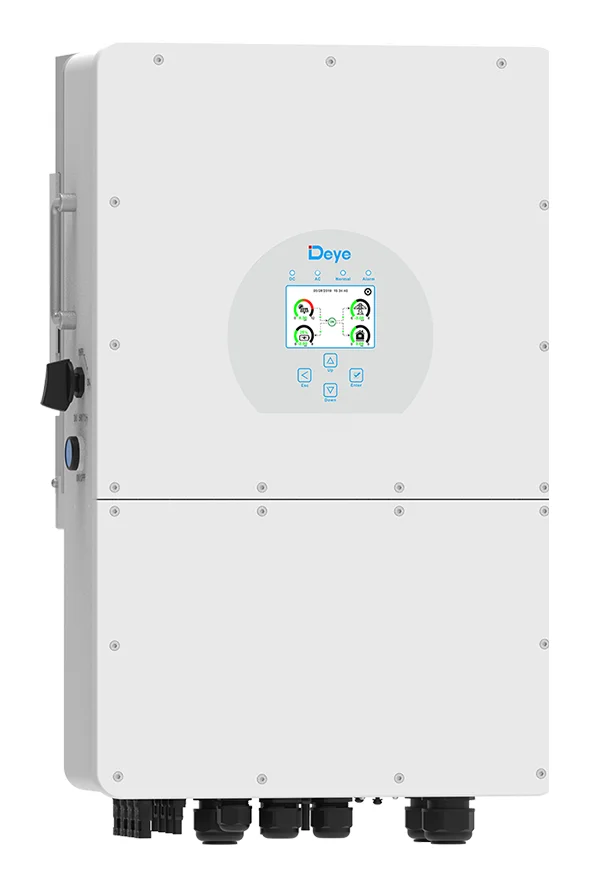
Hybrid inverters
Deye three-phase inverters 5–25 kW, series up to 50 kW for larger sites.
Read moreHow much does a solar park for a business cost?
A 15 kW rooftop system costs €9,840 + VAT and a 15 kW ground-mounted system €10,940 + VAT, both including installation. This is the starting point for a smaller self-consumption system — the price of larger parks is project-based.
| Solution | Capacity | Annual production | Price |
|---|---|---|---|
| Rooftop solar | 15 kW | approx. 13,500 kWh | €9,840 + VAT |
| Ground-mounted solar | 15 kW | approx. 13,500 kWh | €10,940 + VAT |
| Larger parks | up to a megawatt | project-based | project-based |
Prices exclude VAT and a battery. The price of larger parks is affected most by capacity, distance to the connection point and site preparation. We inspect the site and give a transparent quote with no later extras.
Rooftop or ground-mounted — which suits a business?
Rooftop suits self-consumption when the roof of the production building or warehouse is free. Ground-mounted suits you if you want higher capacity or plan to sell part of the production to the grid.
Price at 15 kW
- Rooftop
- €9,840 + VAT
- Ground-mounted
- €10,940 + VAT
Suits when
- Rooftop
- the roof of the production building or warehouse is free
- Ground-mounted
- you have more land than roof
Largest sensible capacity
- Rooftop
- depends on roof area
- Ground-mounted
- up to a megawatt
Permits
- Rooftop
- usually only grid connection
- Ground-mounted
- often a municipal procedure
Best suited for
- Rooftop
- self-consumption, existing building
- Ground-mounted
- higher capacity, selling to the grid
Read more about rooftop solutions or building a ground-mounted plant — if you are unsure which suits you, we come to inspect the site.
Zero export and selling to the grid
A company solar park has three basic configurations: sell the surplus to the grid, limit sales to the grid to zero, or stay off-grid.
| Solution | Grid connection | Surplus goes | When it fits |
|---|---|---|---|
| Grid-selling plant | Yes | To the grid, for sale | When the connection agreement allows production |
| Zero export | Yes | None arises — output is limited | When selling to the grid is not allowed or sensible |
| Off-grid plant | No | Into the battery | Remote sites with no grid connection |
Zero export means the plant is connected to the grid but set up so that it does not sell to the grid — the system continuously measures consumption and reduces the inverter output as soon as production exceeds consumption — or limits inverter power to match what is being consumed on site. It is needed when the grid operator limits feed-in or when the connection agreement does not allow production to be fed into the grid. Zero export works best together with battery storage or when daytime consumption is high — otherwise part of the production goes unused.
An asymmetric hybrid inverter helps set up zero export more precisely, because it directs power to the phase where consumption currently is — read more about asymmetric output.
Battery storage for industry and covering consumption peaks
Starting production equipment creates short consumption peaks for which the connection capacity would otherwise have to be increased. A Deye BOS-A battery system covers these peaks on site.
54–161
kWh of system energy in one BOS-A cluster
160 A
maximum charge and discharge current
16×
clusters in parallel for larger capacity
Besides peak shaving, the battery also raises self-consumption: the midday production surplus goes into the battery, not cheaply to the grid, and covers the evening or morning consumption peak. You will find all models, dimensions and technical data on the battery storage page.
Charging solutions for employees and customers
As electric car use grows, charging is becoming more and more important for businesses, housing associations and public places too.
Semi-public charging point
Charging for a specific user group — for example a company's employees, customers or the residents of an apartment building.
Public charging station
Suits places where different EV users need charging.
Where does a charging point usually fit?
- company and office car parks
- housing associations and new developments
- hotels, restaurants and service locations
- shopping centres and public car parks
We help you choose the right charger according to how it will be used and what your electrical grid allows — VOOL chargers support the OCPP 1.6 and 2.0.1 protocols and automatic load sharing between several charging points. The charger is connected to the same system and uses the company's own solar energy first.
How does installing a company solar park work?
A smaller 15 kW system is completed in one working day. Larger projects take longer, but the process is the same five steps.
- We inspect the siteWe assess the suitability of the production building roof or plot, the connection capacity and the consumption profile.
- We calculate paybackWe give the payback calculation before the decision, not after — self-consumption, zero export or selling to the grid.
- We prepare a quoteCapacity, production forecast and price — transparent, with no later extras.
- We design and sort out permitsWe deal with Elektrilevi and, where needed, the local municipality on the company's behalf.
- We install and hand overMounts, panels, inverter, cabling, monitoring and measurement protocol according to standards.
Payback calculation before you decide
We give the payback calculation before you decide, not after — taking into account the company's actual consumption profile, connection capacity and the chosen setup (self-consumption, zero export or selling to the grid).
The typical payback period for a smaller self-consumption system is 6–7 years without a battery and subsidies, and panels last over 25 years. The payback of a larger, project-based park depends on how much of the production goes to self-consumption — the more energy is used on site, the faster the investment pays off, because on self-consumed electricity you avoid paying the electricity price as well as the grid fee and the renewable energy charge.
Self-consumption can be raised with battery storage, EV chargers and by scheduling larger loads for the daytime.
Why should a business invest in a solar park?
Lower fixed costs
Electricity produced for self-consumption carries no electricity price, grid fee or renewable energy charge — a cost that otherwise comes again every month.
Protection against price swings
Part of the energy need is covered by your own production, so a rise in the exchange price affects the company's costs less.
Energy independence
Reduces dependence on grid load and supply disruptions, especially together with battery storage.
A visible step in sustainability
Producing your own renewable energy is a measurable and verifiable part of the company's environmental reporting.
Does a business need a permit?
A smaller rooftop system usually only needs an agreement with Elektrilevi on the connection. A larger ground-mounted plant mostly needs a municipal procedure.
We clarify the need for permits already at the site visit and sort out all the documents for the company — read more on the rooftop and ground-mounted pages. Planning the system for a home rather than a business? See solutions for homes.
Frequently asked questions about a company solar park
How much does a solar park for a business cost?
A 15 kW rooftop system costs €9,840 + VAT and a 15 kW ground-mounted system €10,940 + VAT — this is the starting point for a smaller self-consumption system. The price of larger parks is project-based: capacity, distance to the connection point and site preparation affect it most. We give the payback calculation and the price before you decide.
What is zero export and when does a business need it?
Zero export means the plant is connected to the grid but set up so that it does not sell to the grid — all production is used on site. It is needed when the grid operator limits feed-in or when the connection agreement does not allow production to be fed into the grid. The system reduces the inverter output as soon as production exceeds consumption, or limits inverter power to match what is being consumed on site.
Does a company solar park have to sell its production to the grid?
No. Most business customers build the plant for self-consumption — that way it pays for itself faster, because on self-consumed electricity you pay no electricity price, grid fee or renewable energy charge. Selling to the grid is one option of three: self-consumption, zero export or selling, depending on the connection agreement and the consumption profile.
How large can a company solar park grow?
A rooftop system is limited by the roof area; a ground-mounted plant can grow up to a megawatt if the land and the connection agreement allow. On larger sites we also install Deye 30–50 kW high-voltage hybrid inverters.
Can battery storage be installed in a production building to cover consumption peaks?
Yes. The Deye BOS-A battery system (53.76–161.28 kWh) cuts short consumption peaks, so the connection capacity does not have to be increased for them. See models and capacities on the battery storage page.
Can a business offer EV charging to employees or customers?
Yes. We install semi-public charging points (for example for employees or customers only) and public charging stations in car parks, at offices and shopping centres. VOOL chargers support the OCPP 1.6 and 2.0.1 protocols and automatic load sharing between several chargers.
How long does installing a company solar park take?
A 15 kW system is completed in one working day. Larger, project-based parks take longer — the schedule is specified with the quote, as it depends on capacity and the permit process.
Does a business need a building permit?
A smaller rooftop system usually only needs an agreement with Elektrilevi on the connection. A larger ground-mounted plant mostly needs a municipal procedure. We clarify the need for permits already at the site visit and sort them out for the company.
Customer reviews on Google
 Meelis
Google review
Excellent cooperation on building several solar parks, which has helped us produce local electricity and brought significant financial savings. The cooperation covered a complete solution from design through to permits for use. We definitely want the cooperation to continue in the future!
Translated from Estonian
- Tõnu
Google review
Amper ja Volt installed solar panels on our production building in May 2026. Now, on 1 September 2026, we can say that it really helps reduce electricity bills.
Translated from Estonian
 Anto
AntoGoogle review
I have used A&V several times. Panels were installed years ago and batteries last year. A good personal approach. They also help get all the documents in order.
Translated from Estonian
Want more information?
We calculate payback before you decide and offer a solution from a self-consumption rooftop system to a megawatt park.